


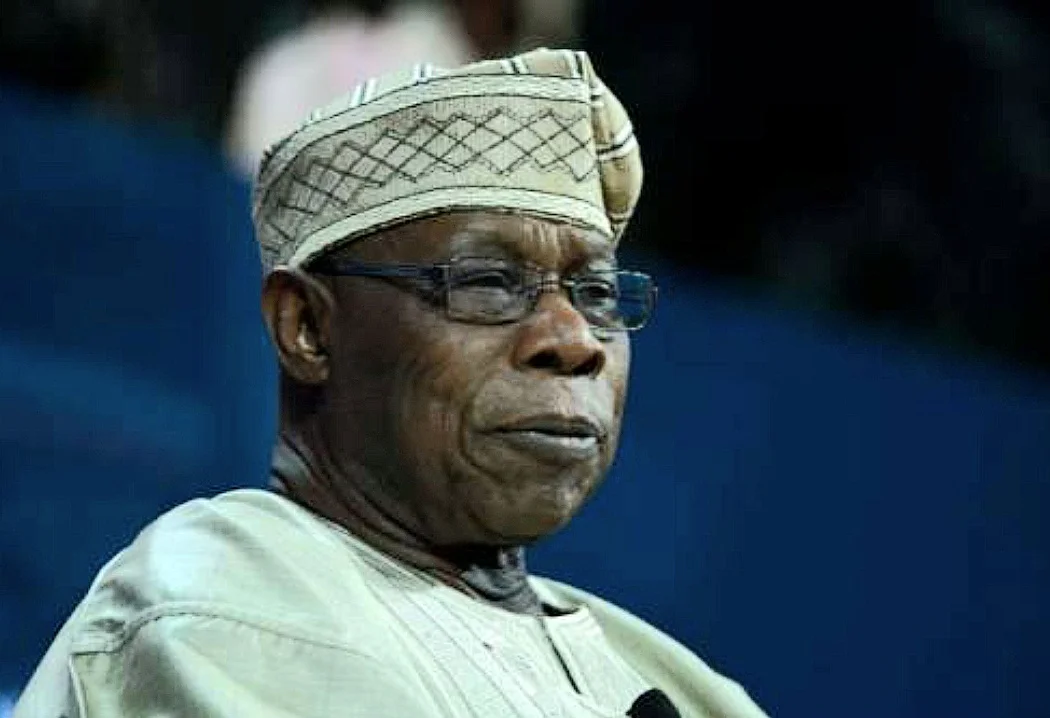
Former President Olusegun Obasanjo has insisted that apartheid in South Africa would not have collapsed when it did without Nigeria’s sustained political, diplomatic and material backing for the liberation struggle.
Speaking in a recent interview on C-Suite Cafe with host Ikem Okuhu, Obasanjo framed Nigeria’s decades-long commitment as a matter of racial dignity rather than national self-interest. “We were not doing what we did in South Africa or in Southern Africa or decolonisation anywhere for our personal gain or for our country. We did it for our race,” he said. “I believe that no black man anywhere or black person anywhere should be regarded as an inferior human being because of his colour.”
He described the effort as “enlightened self-interest” and stressed that Nigeria never expected material rewards in return. “And for me—and I believe for Nigeria at that time and even now—we should be proud of what we did because without Nigeria, South Africa would not have got rid of apartheid when it got rid of it. That is true.”
South Africa’s first non-racial democratic elections in 1994 formally ended the apartheid system. During his years as military head of state (1976–1979) and later as civilian president (1999–2007), Obasanjo worked with a network of African and international leaders who shared the anti-apartheid cause. He named Tanzania’s Julius Nyerere, Zambia’s Kenneth Kaunda, Mozambique’s Samora Machel, former US President Jimmy Carter, former British Prime Minister James Callaghan and former Swedish Prime Minister Olof Palme among those collaborators.
Obasanjo’s remarks come amid rising diplomatic friction between Abuja and Pretoria.

Nigeria’s National Assembly last week suspended all official visits to South Africa and ordered lawmakers and staff to boycott any legislative activities hosted or organised by South African authorities. The decision followed persistent reports of xenophobic violence targeting Nigerian and other African migrants.
Official figures cited by the Ministry of Foreign Affairs indicate that roughly 90 to 98 Nigerians have been killed in mob and hate-related attacks in South Africa since 2022. Thousands more have been displaced or forced to abandon businesses and homes. Nigerian officials have described the pattern as “Afrophobia” and repeatedly called on Pretoria to protect foreign nationals and prosecute perpetrators.
Obasanjo condemned the violence in clear terms. While acknowledging that some migrants may be in the country illegally or may have committed crimes, he rejected any justification for mob attacks on homes and shops. “I do not believe that you use illegality to treat illegality, asking and encouraging area boys and area girls to break into their houses and break into their shops,” he said. He also disputed the claim that African migrants simply take jobs from South Africans, noting that many establish businesses and create employment.
The former president’s intervention has renewed focus on the historical depth of Nigeria–South Africa ties and the current strain caused by recurring attacks on Nigerians living and working in the country. His call for lawful handling of migration issues and mutual respect underscores the gap between the solidarity of the liberation era and the tensions of the present.
Do you want to advertise with us?
Do you need publicity for a product, service, or event?
Contact us on WhatsApp +2348033617468, +234 816 612 1513, +234 703 010 7174
or Email: validviewnetwork@gmail.com
CLICK TO JOIN OUR WHATSAPP GROUP



