

Nigeria has spent almost six decades arguing about unity without fully agreeing on what makes unity worth preserving.
That question has returned to the headlines in an unexpected way.
In Britain, Scotland, Wales and Northern Ireland are again pressing questions about their constitutional futures.
Their demands are not identical.
Scotland and Wales have independence movements, while Northern Ireland’s constitutional debate centres largely on the possibility of Irish reunification.
Yet beneath those differences lies an old political question: How long can a union remain stable when some of its constituent peoples believe its arrangements no longer serve them?
Nigeria should listen. Not because Britain is Nigeria. It is not.
Not because Scotland is Biafra. It is not.
But because Nigeria has wrestled with the same broad questions of power, representation, autonomy, resources and belonging for generations.
Nigeria’s Union Was Never a Simple Story
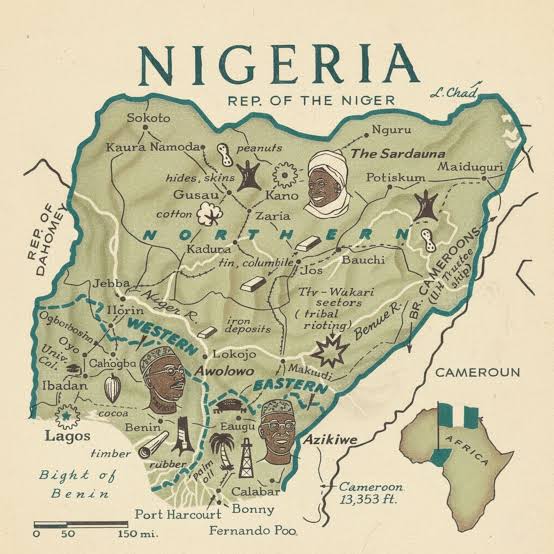
In 1914, Britain amalgamated the Northern and Southern Protectorates. That created one political territory, but geography on a map does not automatically create a shared national consciousness.
At independence in 1960, Nigeria operated as a federation of regions.
The regions possessed substantial political powers and developed distinct political identities.
Then the foundations began to crack.
The coups of 1966, the counter-coup, ethnic killings, the collapse of political trust and the crisis that followed eventually produced the declaration of Biafra in 1967 and the civil war that ended in 1970.
It is tempting to reduce that history to one sentence: Biafra wanted to leave Nigeria.
The deeper story is more complicated.
Biafra was also the consequence of a profound breakdown in trust over security, political power, representation and the terms of the federation.
That distinction matters.
Countries do not usually begin to question their unions on the day somebody declares independence.
The questioning often begins much earlier, when people start asking whether the union is fair.
A Spark Does Not Create Dry Grass
Europe offers another warning.
When Gavrilo Princip assassinated Archduke Franz Ferdinand in Sarajevo in 1914, the killing became the immediate spark for the First World War.
But the assassination did not create European nationalism, imperial rivalry, militarisation and the tensions that had accumulated across the continent.
A spark does not create dry grass.
It reveals how dry the grass has become.
Nigeria should understand that lesson. The Nigerian Civil War did not emerge from one morning’s disagreement.
Years of political tension, fear, violence and institutional failure had already weakened the federation.
That is why constitutional questions should never be treated as abstract discussions for lawyers and politicians.
They can become questions of national survival.
We Have Changed the Vocabulary
Nigeria may have changed the vocabulary of its political argument over the years, but it has not completely settled the argument itself.
There was regional autonomy. Then came the long struggle over resource control.
There were demands for true federalism. Then restructuring became the preferred word.
There have been calls for devolution of powers, state police and stronger local institutions.
There is also zoning, which has become one of the most emotionally powerful features of Nigerian politics.
Different words. Different periods.
But underneath many of them sits the same question: Who decides? Who controls political power? Who controls resources? Who gets what? Who appoints whom?
How much power should Abuja have?
How much should return to the states?
And does every part of Nigeria genuinely believe it has a fair stake in the federation?
These questions have not disappeared because Nigeria remains one country. They have simply changed form.
Resource Control Is About More Than Oil
Few issues demonstrate this better than resource control.
For decades, communities in the Niger Delta have asked why resources extracted from their environment should generate enormous national wealth while producing communities continue to struggle with pollution, poor infrastructure and limited opportunities.
The argument is not merely about money. It is about ownership, responsibility and fairness.
Nigeria’s Constitution recognises the principle of derivation in revenue allocation.
Yet disputes over the size of that share, federal control and the broader distribution of national wealth have remained politically sensitive.
This is where economics becomes identity.
When people repeatedly see what their land produces, what the centre controls and what returns to their communities, an economic argument can gradually become a political one.
And political arguments can eventually become arguments about belonging.
Why Zoning Matters So Much
Zoning is often dismissed as political bargaining. It is more revealing than that.
Zoning tells us something about trust.
If Nigerians completely trusted their institutions to guarantee fairness regardless of who occupied the presidency, would geographical rotation carry the same emotional weight?Perhaps not.
The intensity surrounding zoning partly reflects a fear that political power, once captured by one part of the country, may not circulate fairly.
That is why the argument over who should produce the next president is rarely just about geography.
It is about confidence in the system.

A healthy federation should make citizens believe that they can lose an election without losing their place in the country.
When Development Becomes Identity
There is another danger Nigeria must confront. When development becomes uneven enough, citizens begin to interpret roads, universities, ports, industries, federal appointments, railways and other public investments through regional eyes.
A road is no longer simply a road.
An appointment becomes evidence.
A university becomes a political statement.
A government project becomes proof that one region matters more than another.
This is how national identity slowly becomes regional identity.
The danger is not diversity itself.Nigeria has always been diverse.
The danger is when citizens begin to believe that the federation works better for some than for others.
What Britain Is Showing Us
This is where the current debate in Britain becomes relevant.
The United Kingdom has its own complicated constitutional history.
Scotland, Wales, England and Northern Ireland have different histories, institutions and political identities.
Yet Britain has also demonstrated that a union can evolve.
Devolution created separate political institutions in Scotland, Wales and Northern Ireland without immediately dissolving the United Kingdom.
That is an important lesson for Nigeria.
A union does not have to choose between complete centralisation and immediate separation. There can be negotiation. There can be devolution. There can be institutional reform.
There can be new constitutional arrangements. There can also be peaceful arguments about whether the existing union remains desirable.
Nigeria should not fear those conversations.
It should fear a country where people are afraid to have them.
Nigeria Does Not Need Another Biafra
The lesson of Biafra should not be that every constitutional disagreement leads to separation. The lesson should be that unresolved grievances can become dangerous when institutions fail to address them.
Nigeria does not need to break apart to acknowledge that its structure has weaknesses.
Restructuring does not automatically mean disintegration.
Resource control does not automatically mean secession.
State police does not automatically mean the collapse of national security.
Devolution does not automatically weaken Nigeria.
Sometimes, giving people greater control over matters closest to them can make a larger union stronger.
The real question is whether reforms can produce a federation in which citizens feel represented, protected and valued.
The Union Must Mean Something
Nigeria’s greatest constitutional challenge may therefore not be how to keep everybody together.
It may be how to make staying together meaningful.
A flag cannot do that.
A slogan cannot do it.
Neither can repeated declarations that Nigeria’s unity is “not negotiable.”
Unity is strongest when citizens freely believe they have something worth protecting together.
That requires fairness.
It requires representation. It requires trust. It requires institutions that work. It requires development that does not make citizens feel permanently forgotten.
And it requires the courage to discuss uncomfortable questions before they become crises.Britain’s constitutional debate is not Nigeria’s story.
But it gives Nigeria a useful mirror.
Scotland is not Biafra. Wales is not the Southwest. Northern Ireland is not the Niger Delta.
The United Kingdom is not Nigeria.
But the questions are recognisable. Who belongs? Who decides? Who benefits? Who consents?
And what makes remaining together worthwhile?Nigeria has been asking versions of these questions since before independence.
Perhaps it is time to stop treating them as threats to national unity.
Perhaps answering them honestly is how national unity becomes stronger.
Because a union is not sustained simply by the word union. It is sustained by the belief that the arrangement is fair.
Nigeria does not necessarily need to become smaller. It needs to become fairer.
And that may be the most important lesson Nigeria can take from Britain’s present constitutional debate.
Do you want to advertise with us?
Do you need publicity for a product, service, or event?
Contact us on WhatsApp +2348033617468, +234 816 612 1513, +234 703 010 7174
or Email: validviewnetwork@gmail.com
CLICK TO JOIN OUR WHATSAPP GROUP
The real question is not whether Nigerians can remain together. It is what must change to make more Nigerians want to.
ValidViewNetwork reports that the renewed constitutional debate in Britain has placed questions of self-determination and the future of political unions back in the spotlight.
For Nigeria, the moment offers an opportunity to reconsider its own unfinished debates over federalism, restructuring, resource control, representation and national belonging.